 ™
In detail
Two more examples: why not just a navigation app
| A border or toll is ahead | Shows the road | We tell you what to have ready: documents, vignette, toll payment |
| Your family worries at home | They wait for your message | A private live link and, if you want, news from us |
Who this is for
Not everyone. If you ride the same loop every Sunday, you don't need us. You need us the day you point the bike at a place you've never been and the map stops being familiar.
The solo long-distance rider
Thessaloniki to the Nordkapp. Belgrade to Lisbon. Three weeks, one bike, no backup vehicle. You're self-sufficient and you like it that way - but a fall on a Bulgarian back road with no one behind you is a different kind of alone. We're the one on the radio.
The first big trip
You've done day rides and a weekend or two. Now it's the Dolomites, or the Transfăgărășan, or the whole Balkan loop. You don't know what you don't know yet. We know a lot of it, and we usually tell you in time.
Couples and small groups
Two to four bikes, different experience levels, one rider who always ends up ten minutes behind. We watch the group spread, we plan fuel for the smallest tank, and the slower rider can talk to us instead of apologising to the group.
The rider with people at home
Your partner or your parents don't love the trip. They love you. A private live link that shows your position, whether you're moving or stopped, and your estimated arrival time - and, if you want, we keep them informed - changes the conversation before you leave.
The rider coming back
You stopped for a few years - a crash, a child, a job - and you're starting again, carefully. Having someone watching the first long days back takes the edge off, and nobody but you and us needs to know.
The rider who wants to see things
You're not collecting kilometres. You want the pass nobody mentions, the village with the one good tavern, the viewpoint at the right hour. That's what the ride plan is for, and the operator helps you stay on it.
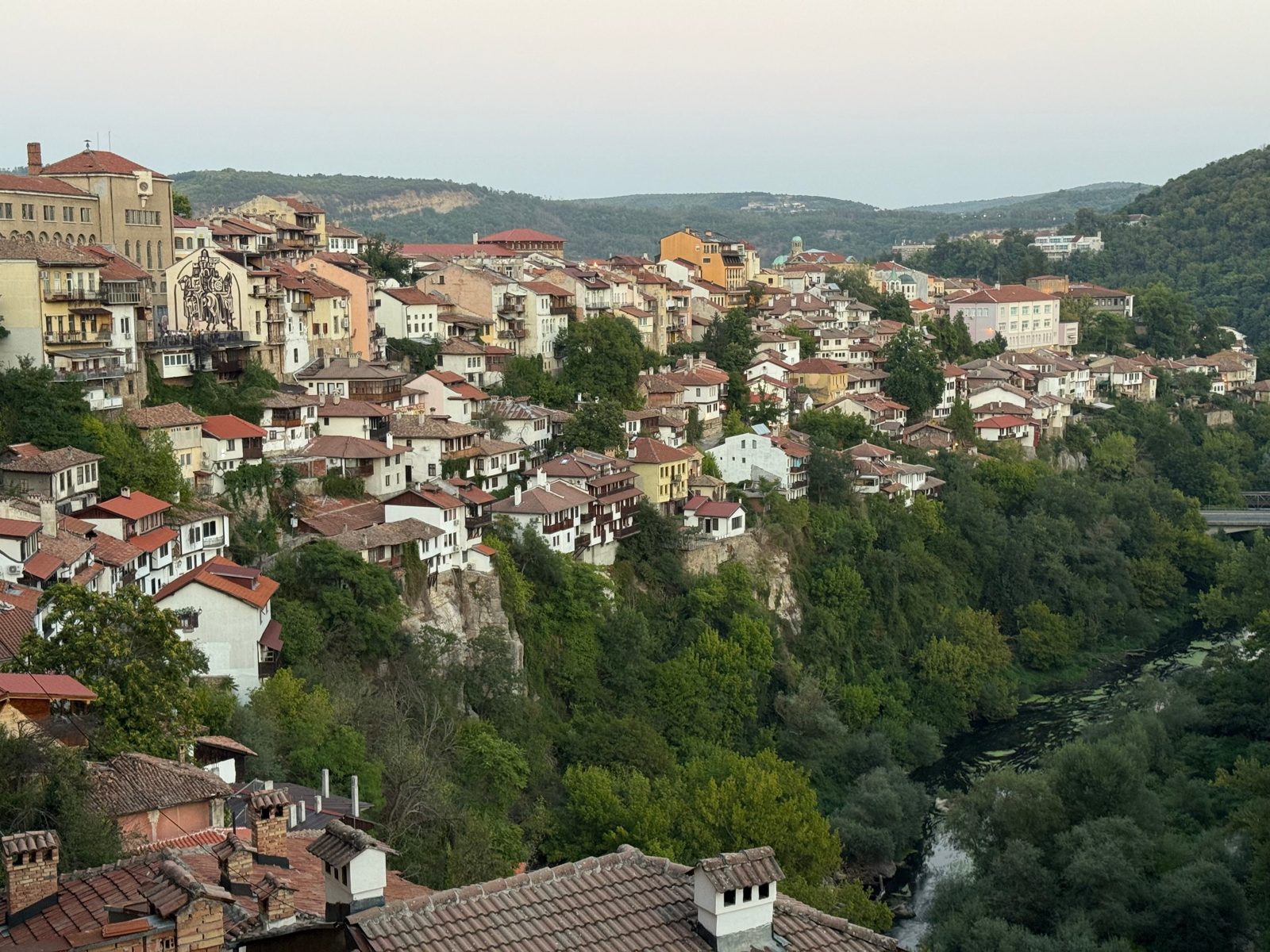
A day with us, hour by hour
Day five of a six-day trip. Plitvice to Cortina, 418 km, three passes, three borders inside Schengen. Here is what you actually experience.
Your phone shows the day's brief: route loaded on the Garmin last night, fuel at Karlovac and Tarvisio, into Austria through the Loibl tunnel, storm cell expected over Cortina at 16:00 so lunch is short and the plan is to be in by 15:00. One message: "Morning. Dry all the way to the pass. Call when you roll."
You press the intercom button. "Rolling." "Copy, have a good one. Nothing to tell you for two hours."
"Fuel at Karlovac in four kilometres, it's the one on the right after the bridge. Coffee's decent." We flagged the fuel stop - your fuel gauge still decides.
"Loibl in about twenty minutes, quiet today. Have your passport or ID card with you, and the tunnel toll is paid at the booth." You're through in a few minutes.
Lunch stop in Tarvisio was in the plan. The operator doesn't call.
"Rain in nine minutes at the top of the pass. Refuge on your right in two kilometres if you want to suit up. The road after it is dry." You suit up. It rains for twelve minutes. You're dry.
You stop for a photo on a hairpin and forget to say so. Forty seconds later: "We saw a hard stop, you OK?" "Photo." "Good man. Enjoy the view." That call is the whole service in one sentence.
"Road's closed after Pocol, there's been a crash. I suggest the old road round it: adds six minutes and it's a better ride anyway. If you take it, turn right at the church." You take it, and your Garmin reroutes.
Hotel. At home, your partner's phone showed a green dot and "arrived" before you'd taken your gloves off. The storm hits Cortina at 15:50. You're watching it from a terrace.
Seven contacts in an eight-hour day, each of them under fifteen seconds. The rest of the time it was just you and the road, which is the point.
The usual doubts, answered honestly
"I ride to get away from people talking to me."
So do we. The operator speaks when something ahead needs you to know, and otherwise stays off the channel. You set the level at setup: "only safety and fuel" is a valid choice. You can change the level any day.
"My Garmin and a weather app do this."
Your Garmin knows the road. The app knows the forecast for a town. Neither knows your fuel, your hours in the saddle, that the station ahead is closed on Sundays, or that you stopped and didn't move. And neither has a person who calls your emergency contact for you. The difference isn't the data; it's a person reading all of it with your day in mind. More on that here.
"It feels like being watched."
It is, by one person whose job is to watch, during a ride you booked, and never between rides - we switch your tracker's sending off at the end of your trip, and any positions that still reach us are not looked at and are deleted after 30 days. What we keep, and for how long: rider questions.
"What if I lose signal on the pass?"
Before you leave we point out the dead zones known on your route, and we try to call you as soon as you're back in coverage. How that works.
"I'm an experienced rider. I don't need hand-holding."
Then you'll use us the way experienced riders do: as a logistics desk. Borders, fuel, weather windows, a mechanic's number at six on a Saturday, a suggested reroute before the junction. Nobody holds your hand. Somebody is watching the road with you.
"Isn't it expensive?"
A solo day costs about the same as a hotel night on the road (prices above). Against a ruined day waiting for a tow you couldn't find, a pass you turned back from because you weren't sure, or the trip you cut from ten days to six because of the what ifs, the maths is quick. Then there's the time you win back. No pulling over to check the map, the weather, the next fuel or a phone number - you ask, and the answer is in your ear while you keep riding, including the things you didn't know you'd need. Those saved stops add up: you can arrive earlier, with time left for the place you came to see. Groups share one operator, so the price per rider drops.
How you're connected
There are two separate links, and it helps to keep them apart in your head: the one between riders, and the one between you and us.
Link 1: riders talking to each other
If you ride in a group, your intercoms already talk to each other helmet to helmet, over their own short-range radio. That link is yours and it stays exactly as it is. We don't sit in it and it keeps working with no phone signal. Solo riders don't have it and don't need it.
Link 2: you and the control room
Your voice link to us runs through your phone and reaches your ears through the same intercom, the way a phone call does on the bike. Up to ten riders, each on a personal channel or on one shared tour channel. On a personal channel we call you when something needs saying, and you call us back with one button. On a tour channel the operator can speak to everyone, to one rider privately, or just listen, while your bike-to-bike intercom carries on underneath. Your position comes from the tracker on your bike (below). Which mode you get is agreed with you at setup; configuring it for your exact headsets is our job; you don't touch anything on the road.
When there's no signal
Mountains have dead zones, and before you leave we point out the ones known on your route. In one, the bike-to-bike intercom keeps working, your positions are stored and catch up when you're back in coverage, and we try to call you as soon as you reappear. In a group this rarely matters: riders strung out over a pass are seldom all out of coverage at once, and whoever has signal relays to the rest over the intercom. If you don't reappear when you should, that's an alarm for us, not a shrug. Long stretches without signal are planned in advance - known dead zones and regroup points.
What we need from you
"Rolling" in the morning, "done" at night, a word when you stop for lunch, and a charged phone. On the road, that's the whole job: no new radio, nothing to look at while riding.
What you need on the bike
- Position: a GPS tracker on the bike. It reports on its own for the whole trip - nothing for you to run while riding - and it keeps reporting even when your phone doesn't, wherever it has mobile signal.
- Your own tracker - we tell you which one. We recommend two models: a small tracker fitted under the seat in about fifteen minutes (or by your mechanic; on a rental bike only with the rental company's permission), or a portable one that plugs into the bike's USB socket and charges while you ride - ideal for rental bikes. You buy it yourself, from a seller of your choice and in your own name (we don't sell or lend trackers), and it stays yours for every trip with us; we set it up for you remotely, and the step-by-step guide comes once your trip is paid in full. Your phone runs our app as an automatic backup: if the tracker goes quiet, the phone takes over. Already have a compatible tracker? Tell us the make and model when you book and we confirm it. Not sure which? The wired one gives the best results; the portable one is the easiest.
- Voice: your phone and a Bluetooth intercom - any intercom that pairs as a headset. That's how you hear us and talk back. Mobile data for every country on your route (flying in: a European eSIM).
- A USB outlet on the bike for your phone. Ten hours of riding beats any phone battery. With the portable tracker you need a second USB socket or a double adapter.
- Optional: a navigator for the routes we send you.
Setup is a 15-minute call before your first ride: we check that everything works together, note your emergency contact and the name you want us to use, and do a test call so you know our voice.
Fuel: planned to your range, cheapest where prices are published
More than 175,000 fuel stations across Europe, on our map
Every one of them is checked against your route and your bike's tank range, so the next stop we suggest is within your estimated range - your fuel gauge always decides. And in the countries that publish official live fuel prices - Germany, Austria, Italy, France and Spain - we tell you where the cheapest fuel on your road is, according to official price data, before you get there.
We built our own fuel calculation for motorcycles: your bike, solo or two-up, your luggage, and the road and weather you're actually riding - every climb, the headwind, the motorway stretch. So we know roughly what's in your tank without asking, and it gets sharper with every tank we ride.
- Before you need it: by our estimate, whether you'll reach the pass, the border or the hotel on what's in your tank - and where to stop if you won't.
- Change the plan at the last minute and the fuel plan follows you.
- Everywhere else we still tell you where to fuel - never a guessed price.
CO₂ of your ride
Your trip's CO₂, in your post-ride report
After your trip, your post-ride report shows how much fuel your motorcycle used and how much CO₂ that produced, for the whole trip. During the ride you can ask us for today's figure.
It's an estimate based on your motorcycle's fuel use on this trip, and it covers only the CO₂ from the fuel burned on the ride. It's information for you, not an emissions offset and not a 'green' label.
Our founder, Christos Arampatzoglou, is certified in Circular Economy (ACTA, ISO/IEC 17024, certificate no. GR-CIEPET 0027347, valid until 2032). It is his personal qualification; our CO₂ figures remain estimates and are not certified.
Ask while you ride
Every service, every distance - live in your ear, usually within seconds of asking.
More than 650,000 restaurants, 330,000 hotels, 60,000 hospitals and clinics, 39,000 police stations and 11,000 motorcycle workshops across Europe - and the distance from you to each of them, live.
We see where you are and the road you plan to take, so we can work out how far any service is from your bike - on the road ahead or around you, and again straight after a reroute. Ask over the intercom and the answer is usually in your helmet within seconds, without stopping or touching your phone.
- Nearest hospital, police station, hotel, restaurant, motorcycle workshop or fuel station, with the distance and which side of the road.
- Phone numbers where available, and we can make the call for you.
- A map can't tell if a hotel has rooms or a kitchen is still serving, so we can call to check before you ride there.
Rider questions
I don't have a GPS tracker. Do I need one?
Yes - a tracker on the bike is what lets us see you reliably, even if your phone stops. You choose between two models we recommend: a wired one under the seat or a portable one that plugs into the USB socket - or use a compatible tracker you already have. You buy it yourself, from a seller of your choice and in your own name (we don't sell or lend trackers); it stays yours for every trip, and we set it up remotely and check it with you on the map before you leave (details above). Your phone runs our app as a backup.
Which countries do you cover?
Europe, including the Balkans, plus Turkey, the Caucasus (Georgia, Armenia, Azerbaijan) and Central Asia (Kazakhstan, Kyrgyzstan, Uzbekistan, Tajikistan) - the Silk Road and the Pamir Highway, where our operators speak Russian with local mechanics, hotels and police. Our deepest local knowledge is Greece, the Balkans, the Alps, the Dolomites and the Pyrenees. Not available in Russia, Belarus or Ukraine. Anywhere else, ask; it depends on data coverage and whether we can research the route properly.
Which languages?
English, Greek, Serbian, Croatian, Bosnian, Russian and German on the radio. You choose the language at setup; the operator assigned to you speaks it.
Can I book for just one hard day, not the whole trip?
Yes, for groups. Solo has a two-day minimum because the setup and getting to know each other on the first day make a one-day booking a poor deal for you.
Do you plan the route or do I?
Either. Bring your own GPX and we work with it, or answer the questionnaire and we build it. Most riders do a mix: they know where they want to go, we fill in the passes, the stops and the fuel.
What hours is the operator there?
From the time you tell us you're rolling until you tell us you've arrived, every day of the booking. Night riding is covered if it's in the plan; if the day runs longer than booked, we agree it with you before dark (extra time as in Terms 14).
What happens if I crash and can't answer?
As soon as the alert reaches us we try you on the intercom and phone, then your emergency contact; if needed, we alert the local emergency number with your last known coordinates, bike, last speed and time. We remain available to the rescue services and, where we can, keep the family or emergency contact you gave us informed. This depends on your tracker, phone and network coverage - events can be missed or misread - so if you are able to, call the local emergency number yourself first (112 in Europe - before the trip we send you the numbers for every country on your route). The full protocol is here.
Can my pillion or partner use the family link?
Yes. It's a private web link, no app, works on any phone. Shows your position, whether you're moving or stopped, and your estimated arrival time. We switch it off at your request at any time.
What do you do with my data?
We look at your position only during booked rides; we switch your tracker's sending off at the end of your trip, and any positions that still reach us are not looked at and are deleted after 30 days. We don't ask for or record health data - except what you tell us in an emergency, which we note and pass on only to protect your vital interests. Never sold; shared when needed to help you (for example with emergency services or a hotel we call for you), with the tour operator who registered you if you ride on a tour, and with service providers working for us. Positions, logs and fuel records are deleted 30 days after the trip, unless needed for a concrete legal claim; your post-ride report and photos are kept until you ask us to delete them. Stored in the EU where possible; providers outside the EU only with GDPR safeguards. Full policy here.
Who's actually on the radio?
Riders. The service was built by one - Christos, who has crossed Europe for years and still does, on a 2025 Tracer 9 - and every operator rides and is trained by him. More here.
Tell us where you're going.
We'll tell you what it costs to have someone on the line.